

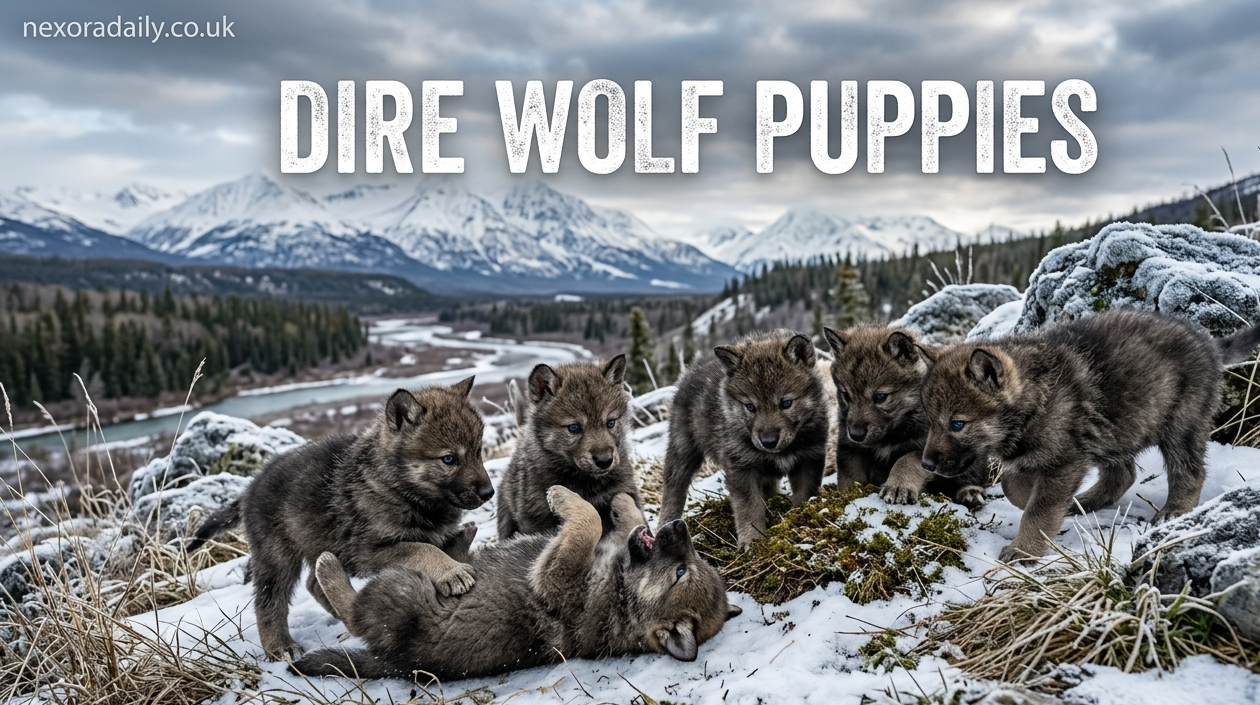
The idea of dire wolf puppies instantly sparks curiosity. Were they larger than modern wolf pups? How did they survive in the harsh Ice Age environment? What did they eat, and how did they grow into one of history’s most powerful predators? These questions have fascinated wildlife enthusiasts, historians, and pop culture fans alike.
Dire wolves were real prehistoric animals that once roamed North and South America thousands of years ago. Unlike fictional portrayals in popular media such as Game of Thrones, real dire wolves were formidable predators that lived during the Late Pleistocene era. While much has been discovered about adult dire wolves, many people are especially interested in learning about their young offspring—commonly referred to as dire wolf puppies.
This article explores the life of dire wolf puppies, including their appearance, habitat, behavior, diet, growth stages, extinction, and how they compare to modern wolf puppies.
What Were Dire Wolves?
Dire wolf were an extinct species of large canines scientifically known as Aenocyon dirus. They lived approximately 250,000 to 10,000 years ago during the Ice Age.
These animals primarily inhabited regions across:
- North America
- Southern Canada
- The United States
- Mexico
- Parts of South America
Dire wolves were larger and heavier than modern gray wolves. They had:
- Strong jaws
- Larger teeth
- Muscular bodies
- Powerful limbs
- Thick fur suited for cold climates
Scientists believe they hunted large prey such as:
- Bison
- Horses
- Camels
- Giant sloths
- Mammoths
Like modern wolves, they likely lived and hunted in packs.
What Did Dire Wolf Puppies Look Like?
Although no perfectly preserved dire wolf puppy fossils have been found, researchers study fossilized bones and compare them with modern wolf pups to make educated conclusions.
Dire wolf puppies were likely:
1. Larger Than Modern Wolf Pups
Since adult dire wolves were bigger than gray wolves, their offspring were likely larger at birth.
They may have had:
- Broader heads
- Larger paws
- Thicker bones
- Stronger jaws developing early
Thick Fur for Survival
Ice Age conditions were harsh, especially during winter seasons.
Dire wolf puppies likely had:
- Dense fur coats
- Soft underfur
- Protection against freezing temperatures
This fur would help keep them warm while staying in dens.
Distinct Facial Features
Experts believe dire wolf puppies may have had:
- Shorter snouts during early development
- Rounded ears
- Bright eyes
- Large noses for strong scent detection later in life
Like modern puppies, they were probably adorable despite being future apex predators.
Where Were Dire Wolf Puppies Born?
Dire wolves likely gave birth in dens, much like modern wolves today.
These dens may have been located in:
- Caves
- Rock shelters
- Forested areas
- Hidden valleys
- Underground burrows
A mother dire wolf would protect her pups while the rest of the pack hunted for food.
Safe den locations were crucial for keeping puppies protected from predators like:
- Saber-toothed cats
- Short-faced bears
- Other competing predators
Smilodon was one of the major predators living during the same era.
How Many Puppies Did Dire Wolves Have?
Scientists estimate dire wolves may have had litters similar to modern wolves.
A mother could likely give birth to:
- 4 to 8 puppies per litter
Factors affecting litter size included:
- Food availability
- Climate conditions
- Pack stability
- Predator threats
In harsh Ice Age conditions, not all puppies likely survived to adulthood.
Diet of Dire Wolf Puppies
At birth, dire wolf puppies likely depended entirely on their mother’s milk.
As they grew older:
First Stage: Milk Feeding
Newborn pups likely remained in dens while nursing.
Second Stage: Regurgitated Meat
Adult pack members may have brought partially digested meat back to feed growing puppies.
This behavior is common among modern wolves.
Third Stage: Learning to Hunt
As juvenile dire wolves matured, they likely joined hunts and learned essential survival skills.
Their diet may have included meat from:
- Deer
- Bison
- Horses
- Mammoths
Growth Stages of Dire Wolf Puppies
Newborn Stage
At birth, dire wolf puppies were likely:
- Blind
- Deaf
- Vulnerable
- Fully dependent on their mother
Early Development
After several weeks:
- Eyes would open
- Hearing improved
- Movement increased
Pups would begin exploring their den.
Juvenile Stage
Young dire wolves would begin:
- Playing with siblings
- Practicing hunting behaviors
- Learning pack hierarchy
Adult Transition
By adulthood, they became highly efficient hunters.
Their early development played a major role in survival.
Pack Life and Social Behavior
Dire wolves were believed to be highly social animals.
Dire wolf puppies likely learned important behaviors through pack interactions.
These included:
- Hunting techniques
- Communication
- Territory defense
- Leadership structure
Pack members may have helped raise young pups.
This cooperative behavior increased survival rates.
Threats Faced by Dire Wolf Puppies
Life was dangerous for young dire wolves.
Common threats included:
Predators
Large predators could attack vulnerable pups.
Examples include:
- Saber-toothed cats
- Bears
- Rival wolves
Starvation
If hunting was unsuccessful, puppies could face malnutrition.
Climate Conditions
Extreme cold could threaten young pups.
Disease
Like modern animals, disease may have affected survival rates.
Fossil Discoveries Related to Dire Wolves
One of the most important sources of information about dire wolves comes from La Brea Tar Pits.
Thousands of dire wolf fossils have been discovered there.
Scientists have recovered:
- Teeth
- Skull fragments
- Leg bones
- Complete skeletons
These discoveries help researchers understand how both adult and young dire wolves lived.
Were Dire Wolf Puppies Domesticated?
There is no evidence that humans domesticated dire wolves.
Unlike domestic dogs, dire wolves remained wild predators.
Early humans likely competed with them for food.
Humans may have feared encounters with large wolf packs.
Gray wolf eventually survived while dire wolves disappeared.
Why Did Dire Wolves Go Extinct?
Dire wolves went extinct around 10,000 years ago.
Several factors contributed:
Climate Change
The Ice Age ended, changing ecosystems dramatically.
Loss of Prey
Many large animals they hunted also went extinct.
Examples include:
- Mammoths
- Giant sloths
- Ancient horses
Competition
They faced increasing competition from:
- Humans
- Gray wolves
- Other predators
Lack of Adaptability
Modern wolves adapted better to changing food sources.
Dire wolves may have struggled to survive environmental shifts.
Dire Wolf Puppies in Pop Culture
Interest in dire wolf puppies increased because of A Song of Ice and Fire and its television adaptation Game of Thrones.
In the series:
- Direwolves are enormous
- Highly intelligent
- Deeply bonded with humans
While entertaining, these portrayals differ from real scientific evidence.
Actual dire wolves were wild animals.
Could Dire Wolves Return?
Advances in genetics have sparked discussions about de-extinction.
Scientists studying ancient DNA may someday explore possibilities involving extinct species.
Projects involving animals like the Woolly mammoth often generate similar conversations.
However, bringing back dire wolves remains highly complex and controversial.
Dire Wolf Puppies vs Modern Wolf Puppies
| Feature | Dire Wolf Puppies | Modern Wolf Puppies |
|---|---|---|
| Size | Larger | Smaller |
| Habitat | Ice Age wilderness | Forests, mountains |
| Diet | Large prey meat | Smaller prey |
| Predators | Many dangerous predators | Fewer threats |
| Survival | More difficult | Better adaptability |
Despite differences, both likely shared similar early development stages.
Why People Are Fascinated by Dire Wolf Puppies
There’s something captivating about imagining powerful prehistoric predators as small, vulnerable pups.
People are intrigued because:
- They combine cuteness with danger
- They connect us to prehistoric history
- They inspire fantasy stories
- Fossil discoveries continue revealing new information
The concept of dire wolf puppies bridges science, imagination, and history.
Final Thoughts
Dire wolf puppies were likely born into one of the harshest environments in Earth’s history. From surviving freezing temperatures to learning how to hunt massive prey, their journey from vulnerable pups to dominant predators was extraordinary.
Although Dire wolf are long extinct, their legacy continues through fossil discoveries, scientific research, and popular culture.
