

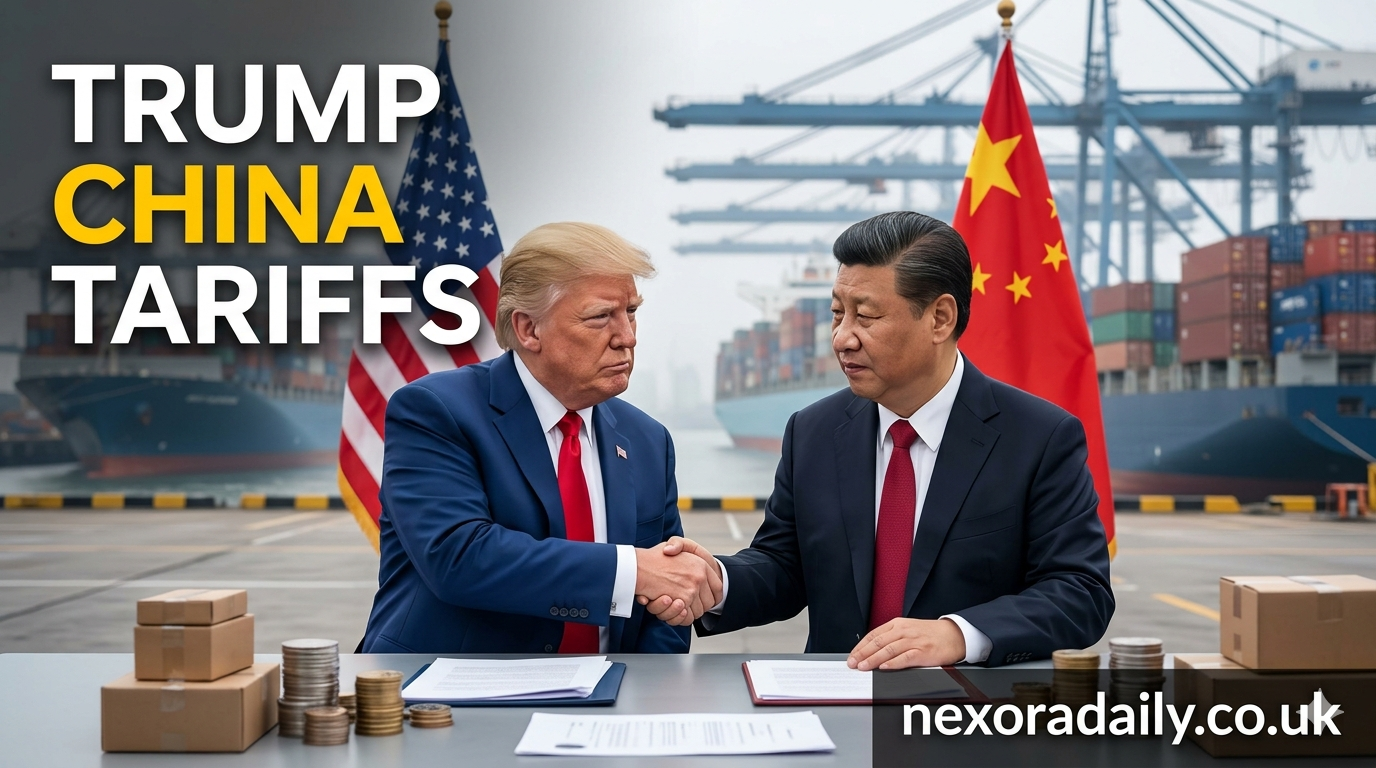
The economic relationship between the United States and China has long been one of the most influential forces in global trade. For decades, American companies relied heavily on Chinese manufacturing because of lower labor costs, large-scale industrial production, and highly efficient supply chains. China became the world’s manufacturing powerhouse, exporting electronics, machinery, textiles, furniture, steel products, and consumer goods to markets across the globe. At the same time, the United States remained one of China’s largest trading partners and biggest consumers of Chinese exports. This economic partnership generated enormous profits for businesses in both countries, but it also created rising political and economic tensions.
The conflict reached a turning point when Donald Trump introduced tariffs on Chinese imports during his presidency. These tariffs became the foundation of what is widely known as the U.S.-China trade war. Trump argued that China had taken advantage of unfair trade practices for years while American manufacturing jobs declined and the U.S. trade deficit with China continued to grow. His administration claimed that strong tariff policies would protect domestic industries, pressure China into trade reforms, and reduce American dependence on Chinese imports. The result was one of the most significant trade disputes in modern economic history.
The Trump China tariffs affected nearly every major industry, including manufacturing, agriculture, technology, logistics, automotive production, and retail markets. Businesses around the world faced uncertainty as supply chains shifted and production costs increased. Consumers experienced rising prices on everyday products, while investors closely monitored the economic consequences of escalating trade tensions. Even years later, tariff policies continue to shape international trade decisions, global manufacturing strategies, and political debates about economic security.
Understanding Trump China Tariffs and Their Purpose
Trump China tariffs refer to import taxes imposed by the United States on goods imported from China. These tariffs were first introduced in 2018 and expanded over multiple stages. The administration targeted hundreds of billions of dollars worth of Chinese imports, including steel, aluminum, machinery, electronics, industrial equipment, semiconductors, and household products. The purpose of these tariffs was to make Chinese products more expensive in the American market and encourage companies to buy domestically produced goods instead.
The Trump administration based its tariff policy on Section 301 of the Trade Act of 1974, which allows the U.S. government to take action against countries accused of unfair trade practices. American officials argued that China had engaged in intellectual property theft, forced technology transfers, industrial subsidies, and currency manipulation. The administration claimed that these practices harmed American companies and weakened the competitive position of U.S. industries. Tariffs were presented as an economic tool designed to pressure China into changing these policies.
Supporters of the tariffs believed the measures would revive American manufacturing and create new industrial jobs. Trump repeatedly argued that the United States had lost factories and production capacity because of cheap imports from China. His administration promoted the idea that companies would move manufacturing back to the United States if Chinese imports became more expensive. Critics, however, warned that tariffs could increase costs for American businesses and consumers because many industries relied heavily on Chinese raw materials, components, and finished products.
The Beginning of the U.S.-China Trade War
The U.S.-China trade war officially intensified in 2018 when the Trump administration announced tariffs on approximately $50 billion worth of Chinese goods. China immediately responded with retaliatory tariffs on American exports, including agricultural products, automobiles, and industrial materials. Over time, both countries expanded their tariff measures, creating a cycle of economic retaliation that disrupted global trade markets.
One of the biggest concerns driving the trade war involved intellectual property protection. The United States accused China of forcing American companies to share sensitive technologies in exchange for market access. Washington also criticized China’s support for state-owned enterprises and its industrial policies aimed at dominating high-tech sectors such as artificial intelligence, semiconductors, telecommunications, and advanced manufacturing. The trade dispute therefore became more than a disagreement about import taxes. It evolved into a larger struggle for technological and economic leadership.
Financial markets reacted sharply to each stage of the trade conflict. Stock markets often declined whenever new tariff announcements were made because investors feared slower economic growth and reduced global trade activity. Businesses faced uncertainty as companies struggled to predict future trade rules and calculate rising production expenses. The trade war created anxiety across industries that depended on stable international supply chains and predictable import costs.
Economic Impact of Trump China Tariffs on the United States
The economic effects of Trump China tariffs were mixed and continue to be debated by economists and policymakers. Some American industries benefited from protection against foreign competition. Domestic steel and aluminum producers, for example, experienced increased demand because imported metals became more expensive. Certain manufacturing companies also gained temporary advantages as tariffs raised the cost of competing Chinese products.
However, many economists concluded that American consumers and businesses absorbed much of the financial burden created by the tariffs. Importers paying higher duties on Chinese goods often passed those additional costs to consumers through increased retail prices. Products such as smartphones, computers, appliances, furniture, clothing, and toys became more expensive in many cases. Research from economic institutions suggested that tariffs effectively acted as an additional tax on American households.
Small and medium-sized businesses faced especially difficult challenges during the trade war. Many companies relied on Chinese suppliers for affordable manufacturing and raw materials. trump china tariffs Shifting supply chains to alternative countries required time, investment, and logistical adjustments that smaller firms often struggled to manage. Some businesses experienced declining profits, reduced competitiveness, and delayed expansion plans because of higher operational costs linked to tariffs.
The agricultural sector also faced major disruptions. China responded to U.S. tariffs by imposing retaliatory taxes on American farm exports, including soybeans, pork, wheat, and corn.trump china tariffs American farmers lost access to one of their largest export markets, causing significant financial pressure in agricultural regions. The U.S. government introduced subsidy programs to support farmers affected by declining exports and falling commodity prices.
China’s Response to American Tariffs
China responded aggressively to Trump’s tariff policies by imposing tariffs on American goods and accelerating efforts to strengthen its domestic economy. Chinese officials rejected accusations of unfair trade practices and accused the United States of violating global free trade principles. Beijing also emphasized the importance of protecting China’s economic sovereignty and industrial development strategies.
Retaliatory tariffs targeted politically sensitive American industries, particularly agriculture. Soybean farmers were heavily affected because China had previously imported large quantities of U.S. soybeans for livestock feed and food production. trump china tariffs Chinese buyers increasingly turned to alternative suppliers such as Brazil and Argentina, reducing demand for American agricultural exports. This shift demonstrated how tariffs could permanently alter international trade relationships.
China also intensified efforts to reduce dependence on American technology and foreign supply chains. The government invested heavily in domestic semiconductor production, artificial intelligence research, electric vehicle manufacturing, and renewable energy technologies. Chinese policymakers viewed the trade war as evidence that the country needed stronger self-sufficiency in strategic industries. This strategy aligned with broader national plans focused on technological innovation and industrial modernization.
Despite economic pressure from tariffs, China maintained strong export performance in several sectors. Chinese manufacturers adapted by expanding trade relationships with countries across Asia, Europe, Africa, and Latin America. Many businesses rerouted supply chains through neighboring countries to reduce tariff exposure. As a result,trump china tariffs China remained a dominant force in global manufacturing even as trade tensions with the United States intensified.
How Tariffs Changed Global Supply Chains
One of the most significant long-term effects of Trump China tariffs was the transformation of global supply chains. Before the trade war, many multinational companies concentrated manufacturing operations heavily in China because of lower production costs and advanced industrial infrastructure. trump china tariffs forced businesses to reconsider this strategy and search for alternative manufacturing locations.
Companies increasingly adopted a “China plus one” strategy, which involved maintaining some operations in China while expanding production into other countries such as Vietnam, India, Thailand, Indonesia, and Mexico. Southeast Asia became a major beneficiary of supply chain diversification as manufacturers sought lower tariff exposure and reduced geopolitical risk. Mexico also gained importance because of its close proximity to the U.S. market and favorable trade agreements.
The technology industry experienced some of the most dramatic disruptions. Tariffs and export restrictions affected semiconductors, telecommunications equipment, computer hardware, and electronic components. trump china tariffs Major technology companies began redesigning supply networks to avoid dependency on politically sensitive regions. Governments also increased scrutiny of technology imports because of concerns related to cybersecurity and national security.
Global shipping and logistics networks became more complicated as businesses adjusted sourcing strategies. Companies had to manage longer delivery times, changing customs regulations, and increased transportation costs. Many firms invested in regional manufacturing hubs closer to consumer markets in order to improve supply chain resilience. Although diversification reduced some risks, it also created additional operational complexity and higher production expenses.
The Effect on Consumers and Inflation
American consumers experienced noticeable effects from Trump China tariffs because many imported goods became more expensive. Retailers and importers frequently transferred tariff costs to customers through higher prices. Products ranging from electronics and home appliances to clothing and furniture saw price increases as businesses adjusted to higher import duties.
Inflation concerns became increasingly important during and after the trade war. Economists argued that tariffs contributed to rising consumer prices by increasing costs across supply chains. Since many American companies depended on Chinese components and materials, trump china tariffs higher import costs affected production expenses in multiple industries. This impact extended beyond imported finished goods and influenced domestic manufacturing prices as well.
The automotive industry faced substantial challenges because of tariffs on steel, aluminum, and industrial components. Manufacturers encountered higher production costs, which contributed to increased vehicle prices. Construction companies also experienced rising material expenses because of tariffs on metals and machinery. These cost increases demonstrated how interconnected global trade systems had become over decades of economic globalization.
Consumers often struggled to understand the direct connection between tariffs and retail prices. While tariffs are officially paid by importers, the financial burden frequently spreads throughout the supply chain. Businesses facing higher costs may reduce employee hiring, increase product prices, or cut investment spending. As a result, tariffs can influence the broader economy in ways that extend far beyond international trade statistics.
Political and Strategic Goals Behind the Tariffs
Trump’s tariff strategy was not driven solely by economic concerns. National security and geopolitical competition played major roles in shaping U.S. trade policy toward China. trump china tariffs American policymakers increasingly viewed China as both an economic competitor and a strategic rival. Concerns about technological dominance, industrial leadership, cybersecurity, and military modernization influenced the administration’s approach to trade relations.
One major objective involved reducing American dependence on Chinese manufacturing in critical industries. Policymakers worried that excessive reliance on Chinese supply chains could create vulnerabilities during geopolitical conflicts or economic crises. Sectors such as semiconductors, pharmaceuticals, telecommunications, and rare earth minerals received particular attention because of their importance to national security and advanced technology development.
The tariffs also reflected broader public frustration with globalization and manufacturing job losses. Many communities across the United States experienced factory closures and industrial decline over previous decades as companies moved production overseas. Trump’s trade policies appealed to voters who believed international trade agreements had weakened domestic industries and harmed American workers.
Even critics of Trump’s tariff policies acknowledged growing concerns about China’s economic influence and industrial expansion. As a result, support for tougher trade measures against China became increasingly bipartisan in Washington. This shift suggests that future U.S. administrations are likely to continue emphasizing strategic competition with China, even if tariff policies evolve over time.
Trump China Tariffs in 2025 and Beyond
Trade tensions between the United States and China continued beyond Trump’s first presidency and intensified again after his return to office in 2025. New tariff discussions focused heavily on advanced technologies, semiconductors, electric vehicles, batteries, and strategic manufacturing sectors. trump china tariffs The administration argued that protecting these industries was essential for maintaining American economic leadership and national security.
By 2025 and 2026, the global economy had already adapted to many of the changes created by earlier tariff rounds. Companies had diversified supply chains, governments had introduced industrial investment programs, and businesses had become more cautious about geopolitical risks. However, uncertainty surrounding future trade policy remained a major concern for investors and multinational corporations.
The semiconductor industry became one of the most important battlegrounds in the ongoing economic rivalry. Both the United States and China invested heavily in domestic chip production because semiconductors are essential for artificial intelligence, military systems, consumer electronics, trump china tariffs and advanced manufacturing technologies. Tariffs and export controls increasingly targeted high-tech industries viewed as strategically critical.
At the same time, diplomatic negotiations continued between Washington and Beijing. Both countries recognized that prolonged economic conflict carried risks for global growth and financial stability. Discussions about selective tariff reductions occasionally emerged, particularly involving agricultural products and consumer goods. However, deep disagreements over technology policy, industrial subsidies, and geopolitical influence continued to limit the possibility of a complete resolution.
The Long-Term Impact on the Global Economy
The Trump China tariffs permanently changed the structure of international trade and global manufacturing. Businesses around the world became more focused on supply chain resilience, geopolitical risk management, and regional diversification. Companies learned that relying too heavily on a single country for production could create serious vulnerabilities during trade disputes or political crises.
Globalization itself entered a new phase as governments placed greater emphasis on economic security and domestic production capabilities. trump china tariffs Countries increasingly promoted industrial policies designed to strengthen local manufacturing, secure critical supply chains, and reduce dependence on foreign competitors. This shift marked a departure from earlier decades when free trade and economic integration were dominant priorities.
International trade relationships also became more politically sensitive. trump china tariffs Economic decisions that were once driven primarily by efficiency and cost reduction are now increasingly influenced by national security concerns, diplomatic tensions, and strategic competition. Industries such as semiconductors, telecommunications, renewable energy, and electric vehicles have become central to geopolitical rivalry between major powers.
For businesses, the trade war highlighted the importance of flexibility and diversification. trump china tariffs Companies that successfully adapted often invested in multiple manufacturing locations and developed more resilient logistics networks. While these changes increased operating costs in some cases, they also reduced exposure to future disruptions caused by tariffs, sanctions, or political instability.
Conclusion
Trump China tariffs reshaped the global economy in ways that continue to influence trade policy, manufacturing strategies, and international relations. What began as a dispute over trade imbalances evolved into a broader economic and geopolitical conflict between the world’s two largest economies. trump china tariffs The tariffs affected industries ranging from agriculture and manufacturing to technology and retail, while also changing how businesses manage global supply chains.
Supporters of the tariffs argue that the policies helped protect American industries, reduce dependence on Chinese manufacturing, and pressure China to address unfair trade practices. trump china tariffs Critics maintain that tariffs increased consumer prices, disrupted businesses, and created economic uncertainty without fully achieving their intended goals. Despite these disagreements, the trade war clearly accelerated changes in global manufacturing and economic strategy.
The long-term impact of Trump China tariffs extends beyond economics alone. The trade conflict highlighted growing competition between the United States and China over technology, industrial leadership, and geopolitical influence. As both countries continue investing in strategic industries and adjusting trade policies, the effects of this economic rivalry will likely shape the future of global commerce for many years to come.
