

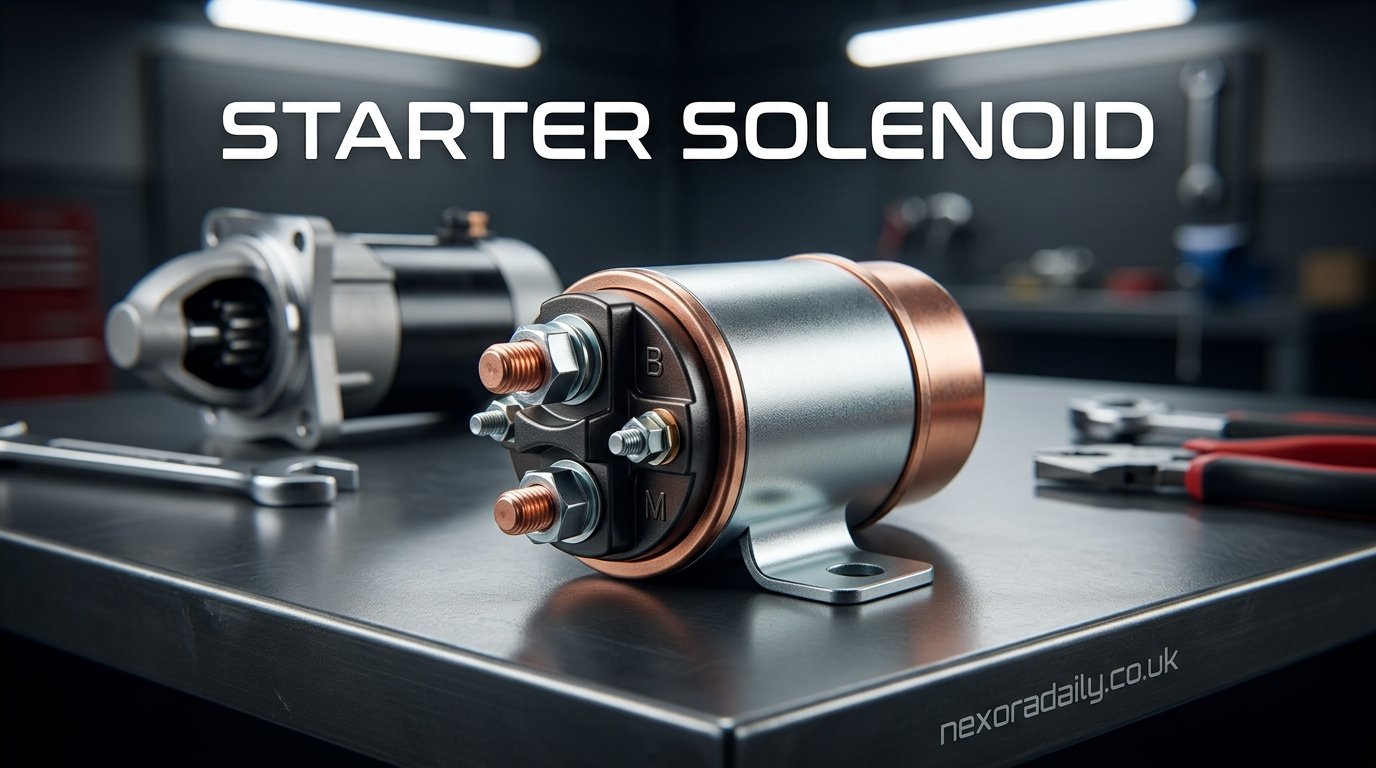
A vehicle’s starting system consists of several components working together to bring the engine to life, and one of the most important among them is the starter solenoid. Although it is relatively small compared to the engine or starter motor, the starter solenoid performs a critical job every time you start your vehicle. Without it, electrical power from the battery cannot properly reach the starter motor, making it impossible for the engine to crank and start.
Many vehicle owners experience starting problems at some point, and a faulty starter solenoid is often one of the main causes. Unfortunately, its symptoms are frequently mistaken for a weak battery, damaged ignition switch, or failed starter motor. Understanding how this component works, why it fails, and how it can be tested or replaced helps drivers diagnose problems more accurately while avoiding unnecessary repairs.
Whether you own a passenger car, pickup truck, SUV, motorcycle, tractor, boat, or commercial vehicle, the principles behind a starter solenoid remain largely the same. This guide explains everything you need to know about starter solenoids, including their working mechanism, common failure symptoms, causes, diagnostic methods, replacement procedures, maintenance practices, and factors to consider when choosing a replacement.
What Is a Starter Solenoid?
A starter solenoid is an electromagnetic switch that connects the vehicle’s battery to the starter motor during engine startup. It serves as the bridge between the ignition switch and the starter motor, allowing a large amount of electrical current to reach the starter only when needed. Most modern vehicles mount the starter solenoid directly on the starter motor, although some older vehicles use a separate remote-mounted solenoid.
The starter solenoid performs two essential tasks simultaneously. First, it acts as a high-current electrical relay that safely transfers battery power to the starter motor. Second, it mechanically pushes the starter pinion gear toward the engine flywheel so the engine can begin rotating. This dual function makes the starter solenoid one of the most important parts of the vehicle’s starting system.
Unlike the ignition switch, which carries only a small electrical signal, the starter solenoid is designed to handle hundreds of amps of current during engine cranking. This protects the ignition system from excessive electrical load while ensuring sufficient power reaches the starter motor. Once the engine starts, the solenoid automatically disconnects the electrical circuit and retracts the starter gear, preventing unnecessary wear or damage.
How a Starter Solenoid Works
The operation of a starter solenoid relies on electromagnetism. When the driver turns the ignition key to the start position or presses the engine start button, a small electrical current flows from the battery through the ignition circuit into the starter solenoid’s control terminal. This current energizes a coil inside the solenoid, creating a strong magnetic field.
The magnetic field pulls a steel plunger toward the center of the solenoid. As the plunger moves, it performs two actions at nearly the same time. It closes a pair of heavy-duty copper contacts, allowing full battery voltage to flow directly to the starter motor. Simultaneously, it pushes the starter drive gear, often called the Bendix gear or pinion gear, into engagement with the flywheel attached to the engine’s crankshaft.
Once battery power reaches the starter motor, the motor begins spinning at high speed. Since the starter gear is already engaged with the flywheel, the rotating starter motor turns the engine until combustion begins. As soon as the driver releases the ignition key or the engine management system detects a successful start, power to the solenoid coil is removed. The return spring pushes the plunger back to its original position, disconnecting electrical power and retracting the starter gear away from the flywheel.
This entire process typically takes less than two seconds under normal conditions. Despite its speed, every movement inside the starter solenoid must occur with precision because improper timing or weak electrical contact can prevent the engine from starting.
Components Inside a Starter Solenoid
Although the starter solenoid appears to be a simple cylindrical device, it contains several carefully engineered components designed to withstand high electrical loads and repeated mechanical movement. The outer housing is usually constructed from steel to provide durability and protect the internal mechanism from heat, vibration, dirt, and moisture.
Inside the housing is an electromagnetic coil made from tightly wound copper wire. When electricity passes through this coil, it generates the magnetic field responsible for moving the internal plunger. The plunger itself is typically made of hardened steel and slides smoothly inside the housing. Attached to the plunger is a contact disc that connects the battery terminal to the starter motor terminal whenever the solenoid is activated.
Heavy copper contacts inside the solenoid carry the high current needed to operate the starter motor. Because these contacts handle hundreds of amps during each engine start, they gradually wear over time. A return spring ensures that the plunger immediately returns to its resting position once electrical power is removed. External terminals connect the battery cable, ignition wire, and starter motor, completing the electrical pathway required for reliable operation.
Each of these components must function correctly for the starter solenoid to operate efficiently. Wear on even one internal part can affect the performance of the entire starting system.
Common Symptoms of a Bad Starter Solenoid
A failing starter solenoid often provides warning signs before complete failure occurs. One of the most recognizable symptoms is hearing a single clicking sound when turning the ignition key. This usually indicates that the electromagnetic coil is operating, but the internal contacts are unable to transfer sufficient battery power to the starter motor.
Some vehicles experience repeated clicking sounds instead of a single click. This commonly occurs when voltage repeatedly drops below the operating threshold because of worn contacts, poor electrical connections, or insufficient battery power. In many cases, drivers mistakenly replace the battery when the actual problem lies inside the starter solenoid.
Another common symptom is intermittent starting. The vehicle may start normally several times before suddenly refusing to crank. As the internal contacts become increasingly worn or burned, electrical continuity becomes inconsistent. Temperature changes may temporarily affect these contacts, causing the problem to appear and disappear unpredictably.
A completely failed starter solenoid may produce no sound at all when the ignition key is turned. In this situation, the internal coil may be open, electrical connections may have failed, or the ignition signal may never reach the solenoid. Proper electrical testing is necessary before replacing components.
In some situations, the starter motor continues running even after the engine starts. This dangerous condition may result from a sticking plunger or welded electrical contacts inside the solenoid. If ignored, the continuously engaged starter motor can quickly suffer severe damage along with the flywheel teeth.
Drivers may also notice slow engine cranking despite having a healthy battery. Increased resistance across worn internal contacts reduces the amount of current reaching the starter motor, causing slower rotation and making engine startup more difficult, especially in cold weather.
Common Causes of Starter Solenoid Failure
Like every mechanical and electrical component, a starter solenoid gradually wears out over time. The most common cause of failure is normal contact wear resulting from thousands of engine starts. Every time the electrical contacts close, a small electrical arc occurs, starter solenoid slowly eroding the copper surfaces. Eventually, these contacts become rough, burned, or pitted, increasing electrical resistance and reducing current flow.
Heat is another significant contributor to starter solenoid failure. Since the solenoid is usually mounted close to the engine and exhaust system, it experiences constant exposure to high temperatures. Prolonged heat accelerates insulation breakdown, weakens internal springs, and increases oxidation of electrical contacts.
Moisture, road salt, dirt, and engine oil contamination can also shorten the life of a starter solenoid. Corrosion developing on external terminals creates poor electrical connections, while internal contamination may restrict the movement of the plunger. Vehicles operated in harsh climates often experience these problems sooner than those driven under milder conditions.
Battery-related issues can place additional strain on the starter solenoid. A weak battery forces the solenoid to operate at lower voltage while still attempting to handle heavy electrical loads. Loose battery terminals, damaged ground straps, corroded cables, and poor charging system performance all contribute to excessive electrical resistance, increasing stress on both the solenoid and starter motor.
Frequent short trips may also reduce component lifespan because the battery has less time to recharge between starts. Likewise, repeated long cranking attempts during engine problems expose the starter solenoid to prolonged heat and heavy current, accelerating wear on its internal contacts and coil.
