

The Defense Federal Acquisition Regulation Supplement (DFAR) is one of the most important regulatory frameworks in U.S. government contracting, yet many businesses entering the defense sector do not fully understand its complexity until they are required to comply with it. Companies that want to sell products, services, software, manufacturing components, cybersecurity solutions, logistics support, or consulting services to the United States Department of Defense (DoD) must often follow DFARS requirements as part of their contractual obligations. These regulations shape how defense contracts are awarded, managed, secured, and monitored throughout the procurement lifecycle.
DFARS serves as an extension of the Federal Acquisition Regulation (FAR), which governs procurement activities across all federal agencies. While FAR provides general procurement rules for the federal government, DFAR adds additional regulations tailored specifically to defense-related acquisitions. These rules address national security concerns, contractor accountability, cybersecurity protection, supply chain risk management, pricing regulations, specialty metals sourcing, intellectual property rights, and contractor performance requirements. As defense procurement becomes increasingly digital and globalized, DFAR continues evolving to address modern threats such as cyberattacks, foreign supply chain vulnerabilities, and data breaches involving sensitive government information.
For businesses hoping to win Department of Defense contracts, understanding DFAR compliance is no longer optional. Failure to meet DFARS requirements can lead to contract termination, financial penalties, suspension from federal contracts, reputational damage, and legal consequences. At the same time, companies that understand DFAR thoroughly can position themselves as trusted defense contractors in a highly competitive marketplace. This guide explains everything businesses need to know about DFAR, including its purpose, history, major clauses, cybersecurity rules, compliance challenges, and future developments.
What Is DFARS?
The Defense Federal Acquisition Regulation Supplement is a set of procurement regulations issued by the Department of Defense to supplement the Federal Acquisition Regulation system. It is codified under Title 48 of the Code of Federal Regulations, Chapter 2, and establishes acquisition policies specifically for military departments and defense agencies. The regulation applies to procurement conducted by the Department of the Army, Department of the Navy, Department of the Air Force, Defense Logistics Agency, National Security Agency, and other defense-related organizations.
DFARS contains detailed guidance for contracting officers and defense contractors on procurement procedures, contract clauses, negotiation strategies, contractor responsibilities, audit requirements, and security protections. It ensures that defense purchases align with military readiness goals while protecting taxpayer funds and national security interests. Since defense contracts often involve highly sensitive technologies and mission-critical infrastructure, DFARS includes stricter oversight requirements than many civilian federal procurement regulations.
Unlike general government procurement rules, DFARS addresses specialized military concerns such as weapon systems acquisition, defense manufacturing, classified technology development, military construction contracts, and defense logistics support. It also ensures contractors comply with federal laws passed by Congress that specifically impact defense spending.
The History and Evolution of DFARS
DFARS was created because defense procurement needs differ significantly from those of civilian agencies. The Department of Defense purchases highly specialized goods and services including aircraft systems, missile technologies, cybersecurity infrastructure, combat vehicles, defense software, military medical equipment, and intelligence systems. These unique acquisitions required additional rules beyond what FAR originally provided.
Over time, DFARS has evolved in response to legislative changes, military modernization efforts, procurement scandals, and emerging threats. During the Cold War era, defense procurement focused heavily on weapons production and industrial manufacturing oversight. Regulations emphasized contractor pricing transparency and cost control measures for major military projects.
After the September 11 attacks, defense procurement expanded into intelligence technologies, cybersecurity systems, surveillance tools, and counterterrorism operations. In recent years, cybersecurity regulations became one of the most rapidly growing sections of DFARS due to increased ransomware attacks, foreign cyber espionage, and attacks targeting defense contractors. The government recognized that even small subcontractors could become weak links in national defense infrastructure.
Today, DFARS continues evolving as artificial intelligence, cloud computing, quantum technology, and global geopolitical risks reshape defense procurement strategies.
How DFARS Works with FAR
Many contractors confuse DFARS with FAR, but they serve different functions. FAR acts as the primary procurement framework used across all federal agencies. It establishes baseline rules related to ethics, procurement procedures, competition requirements, contract management, and contractor conduct.
DFARS builds on FAR by introducing defense-specific regulations. Contractors working with the Department of Defense must often comply with both systems simultaneously. When FAR establishes a broad procurement rule, DFARS may provide more specific guidance tailored to military operations.
For example, FAR may outline general contractor reporting obligations, while DFARS may require stricter cybersecurity reporting standards for contractors handling defense-related data. FAR may establish broad sourcing rules, while DFARS may impose tighter restrictions on foreign-manufactured materials used in military equipment.
Understanding both regulations is essential because contractors cannot rely solely on FAR compliance when pursuing defense contracts.
Major DFARS Clauses Contractors Must Understand
One of the most important components of DFARS is Part 252, which contains contract clauses inserted into defense agreements. These clauses become legally binding when included in contracts and often determine how contractors must operate.
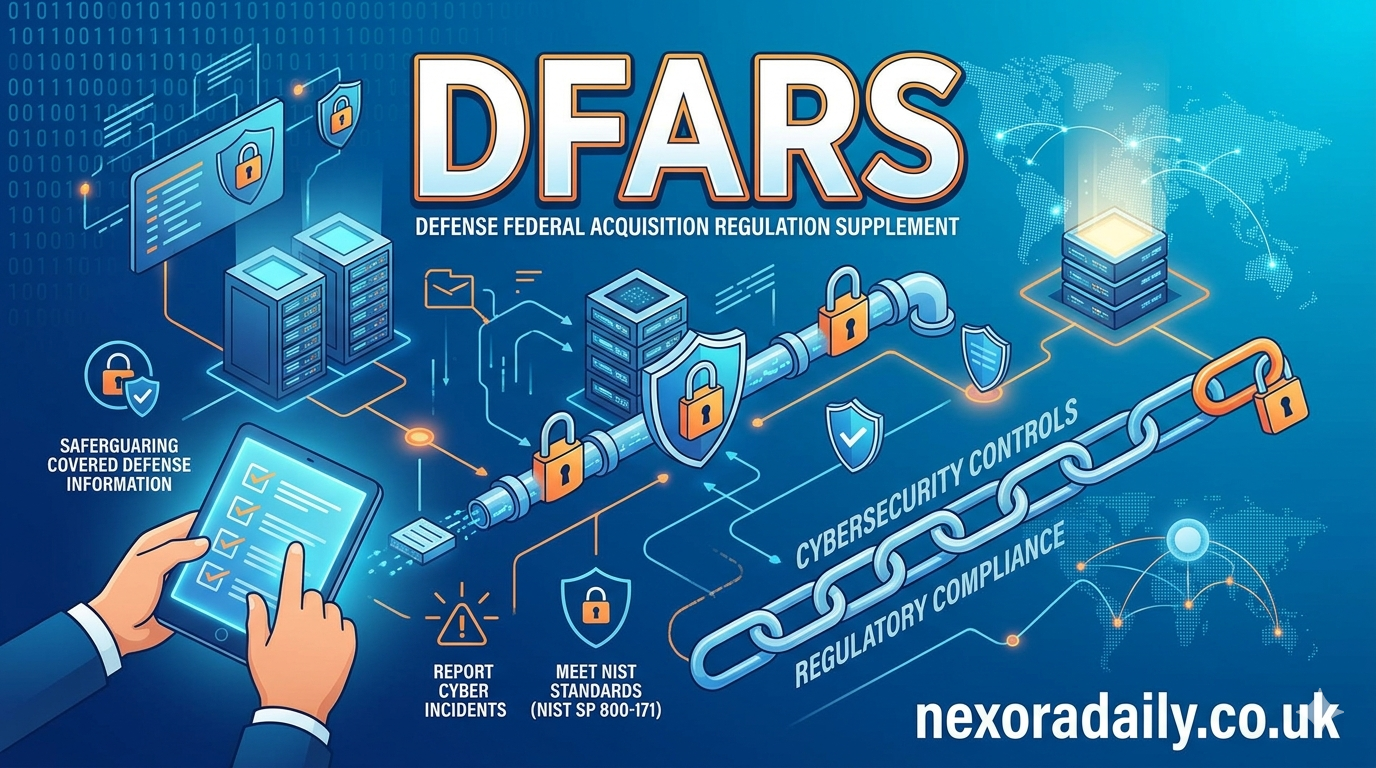
DFARS 252.204-7012 is one of the most widely discussed clauses because it requires contractors to safeguard Covered Defense Information and report cyber incidents. It mandates compliance with NIST SP 800-171 cybersecurity standards and requires rapid incident reporting when breaches occur.
DFARS 252.225 addresses restrictions on specialty metals sourcing, ensuring certain materials are sourced from approved countries. These rules help reduce dependence on foreign adversaries for critical defense materials.
DFARS clauses also govern intellectual property rights, cost accounting standards, counterfeit electronic part prevention, contractor business systems, and contractor performance evaluations. Each clause carries significant legal and operational responsibilities.
DFARS Cybersecurity Requirements
Cybersecurity has become one of the most critical aspects of DFARS compliance. The Department of Defense increasingly relies on private contractors to manage sensitive systems, making cybersecurity essential to national defense.
DFARS 252.204-7012 requires contractors to protect Covered Defense Information stored, transmitted, or processed through contractor systems. Companies must implement NIST SP 800-171 controls covering access restrictions, incident response planning, system monitoring, employee training, encryption, authentication protocols, and vulnerability management.
Contractors must report cyber incidents to the Department of Defense within 72 hours of discovering a breach. They may also need to preserve forensic evidence and cooperate with federal investigations.
The introduction of the Cybersecurity Maturity Model Certification (CMMC) further strengthened defense cybersecurity expectations by requiring third-party verification of contractor security practices.
Controlled Unclassified Information Under DFARS
Controlled Unclassified Information (CUI) plays a major role in DFARS compliance. CUI includes sensitive government information that is not classified but still requires protection from unauthorized access.
Examples include engineering designs, technical drawings, defense logistics data, operational procedures, research information, and proprietary government data. Contractors handling CUI must implement security protections required under DFARS regulations.
Improper handling of CUI can expose military operations to espionage risks, intellectual property theft, and operational vulnerabilities. As a result, contractors must carefully classify, store, transmit, and protect sensitive information.
Many small contractors underestimate their exposure to CUI until they review contract language carefully.
DFARS Compliance Challenges for Contractors
Many companies struggle with DFARS compliance because the regulations are highly technical and constantly evolving. Small businesses often face major financial burdens when upgrading cybersecurity systems, training staff, and hiring compliance specialists.
Large contractors face different challenges involving global supply chain monitoring, subcontractor oversight, regulatory audits, and enterprise-wide compliance integration. Managing compliance across thousands of suppliers can become extremely complex.
Documentation requirements also create operational challenges. Contractors must maintain evidence showing they meet security standards, sourcing requirements, and reporting obligations.
Without proper legal and compliance support, organizations may unknowingly violate contract terms.
DFARS and Supply Chain Security
Modern defense supply chains involve thousands of suppliers across multiple countries. This complexity increases risks involving counterfeit parts, foreign surveillance threats, intellectual property theft, and operational disruptions.
DFARS includes regulations designed to reduce these risks. Contractors must verify component authenticity, monitor suppliers, and comply with sourcing restrictions for sensitive materials.
Supply chain security became even more important after global semiconductor shortages exposed vulnerabilities in defense manufacturing systems. The Department of Defense continues strengthening procurement rules to improve resilience.
Foreign ownership concerns also influence DFARS compliance decisions.
Audits, Enforcement, and Penalties
Defense contractors may face audits from agencies such as the Defense Contract Audit Agency (DCAA), Defense Contract Management Agency (DCMA), and DoD cybersecurity review teams.
Auditors examine contractor accounting systems, cybersecurity controls, cost reporting practices, and contract compliance records. If violations are identified, contractors may face corrective action requirements.
Serious violations can trigger suspension, contract cancellation, False Claims Act investigations, civil penalties, and criminal liability in extreme cases.
Enforcement actions demonstrate that the government expects full compliance from defense contractors.
The Future of DFARS
DFARS will continue evolving as national security threats become more sophisticated. Artificial intelligence, autonomous weapons systems, quantum computing, cloud infrastructure, and space defense programs are reshaping procurement needs.
Cybersecurity requirements will likely become stricter as nation-state cyber threats increase. Supply chain restrictions may also expand as geopolitical tensions influence sourcing decisions.
Companies that invest early in compliance systems, cybersecurity infrastructure, and regulatory expertise will be better positioned for future defense contracting opportunities.
Conclusion
DFARS remains one of the most important regulatory frameworks in federal contracting because it directly supports national security, military readiness, and responsible defense spending. Its requirements affect every stage of the defense acquisition process, from bidding and contract negotiation to cybersecurity compliance and supply chain oversight.
For contractors, DFARS compliance can feel overwhelming, but understanding these regulations creates significant long-term opportunities. Businesses that meet DFARS standards demonstrate trustworthiness, operational maturity, and commitment to protecting sensitive defense information.
As the defense industry becomes increasingly reliant on digital systems and global suppliers, DFARS will continue playing a critical role in protecting both government interests and national security. Organizations that prioritize compliance today will be better prepared for tomorrow’s defense contracting landscape.
