

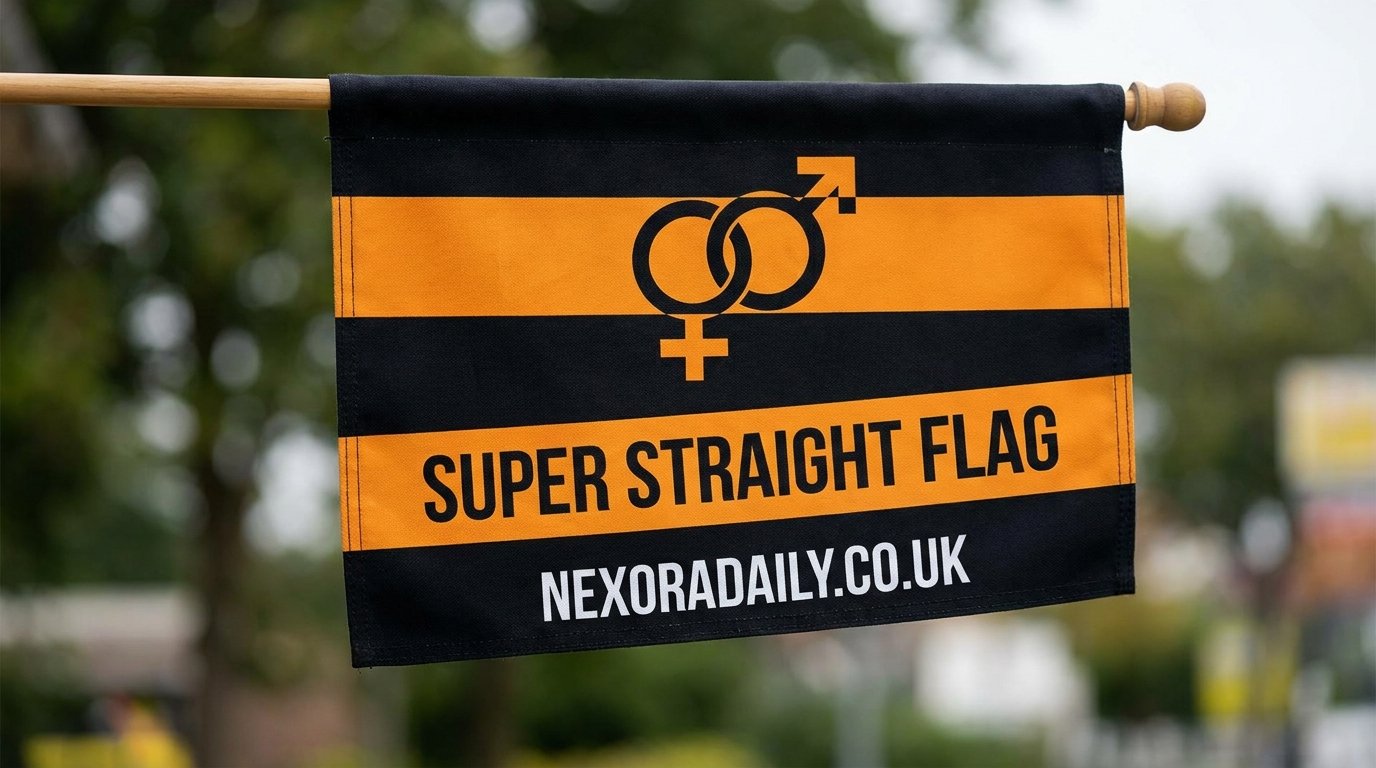
The super straight flag became one of the most talked-about internet symbols in 2021 after a viral social media trend introduced the term “super straight.” Within just a few days, the flag spread across platforms like TikTok, Twitter, Reddit, and Discord, leading to widespread discussion about sexuality, gender identity, online communities, and freedom of expression. While some people viewed it as representing a personal dating preference, many LGBTQ+ organizations, researchers, and journalists argued that the movement was closely connected to online campaigns that promoted anti-transgender messages.
Unlike long-established pride flags that developed over many years through community activism, the super straight flag appeared suddenly during an internet trend. Because of its unusual origin and the debates surrounding it, the flag remains highly controversial today. Understanding its history requires looking at both its creation and the broader conversations it sparked. This article explores the super straight flag in a balanced and factual way, explaining its origin, symbolism, public reaction, and continuing significance in online culture.
What Is the Super Straight Flag?
The super straight flag is a black-and-orange flag that appeared online in early 2021 alongside the introduction of the term “super straight.” The identity was described by its supporters as referring to people who are only attracted to individuals whose gender identity matches the sex they were assigned at birth. Those using the label argued that it represented a personal preference in dating rather than hatred toward any group.
From the beginning, however, the term generated significant disagreement. Many LGBTQ+ advocates argued that while everyone has personal dating preferences, creating a separate identity centered on excluding transgender people could reinforce harmful stereotypes. As a result, the super straight flag quickly became associated with wider debates about gender identity, inclusion, and respectful communication.
Although the flag received widespread attention online, it has never become an officially recognized pride flag. Instead, it is generally viewed as a symbol connected to a short-lived but influential internet movement that sparked discussions far beyond social media.
The Origin of the Super Straight Movement
The phrase “super straight” first gained public attention in February 2021 after a TikTok video went viral. In the video, the creator explained that he wanted a label for his dating preference after receiving criticism online. The video spread rapidly, and thousands of users began sharing similar posts using the new term.
As interest increased, internet researchers and journalists investigated how the trend had grown so quickly. Their reporting found that anonymous online communities helped spread the movement by creating memes, hashtags, profile pictures, and discussions designed to attract attention. Some researchers concluded that parts of the campaign were intentionally promoted to create conflict around transgender issues.
Despite these findings, not every person who used the term participated for the same reasons. Some viewed it simply as describing their personal attraction, while others became involved because the topic had become a major online discussion. This difference in motivation remains an important part of understanding the movement’s history.
The Design and Meaning of the Super Straight Flag
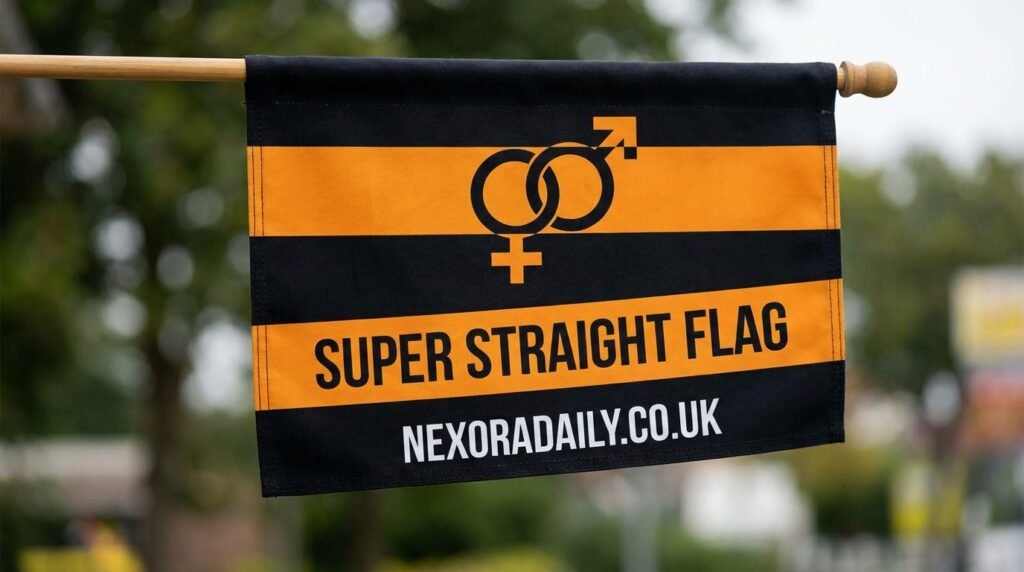
The super straight flag uses two bold colors: black and orange. These colors made the design instantly recognizable on social media and helped the symbol spread quickly across online platforms. Many internet users noticed that the color combination closely resembled the branding of a well-known adult entertainment website, leading to widespread speculation that the similarity was intentional. No official explanation has ever been universally accepted.
Supporters generally described the flag as representing heterosexual attraction limited to people who are not transgender. Critics argued that the symbolism reflected exclusion rather than identity and believed the flag communicated a message that could negatively affect transgender individuals. Because of these opposing interpretations, the meaning of the flag depends heavily on the perspective of the person viewing it.
Unlike many pride flags that have carefully documented histories and widely accepted meanings, the super straight flag has no official organization responsible for its design or interpretation. Its significance comes almost entirely from the online conversations surrounding its creation.
Why the Super Straight Flag Became Controversial
The controversy surrounding the super straight flag developed almost immediately after its appearance. Many LGBTQ+ organizations stated that people have the right to choose whom they date, but argued that creating a separate identity focused specifically on excluding transgender people was unnecessary and potentially harmful. They believed that such messaging contributed to discrimination rather than encouraging respectful discussion.
Others argued that attraction cannot be controlled and that individuals should not be criticized for expressing personal dating preferences. This disagreement created an ongoing debate between discussions about individual attraction and broader questions about social inclusion. As a result, conversations about the flag often extended well beyond its original purpose.
Another reason for the controversy involved reports about the movement’s rapid growth. Digital researchers identified coordinated online efforts that appeared to encourage the spread of the term through memes and viral content. These findings influenced public opinion and led many observers to associate the movement with internet trolling rather than with the development of a genuine new identity.
Is the Super Straight Flag Part of the LGBTQ+ Community?
The super straight flag is not recognized by major LGBTQ+ organizations as an official pride flag. Established pride symbols, including the rainbow flag, transgender pride flag, bisexual pride flag, and lesbian pride flag, were created through years of community activism and have become widely accepted within the communities they represent.
By comparison, the super straight flag emerged rapidly through social media without a recognized organization or long-term community behind it. Because of its controversial origin and the debates surrounding its purpose, it has not been included among officially recognized LGBTQ+ pride symbols or celebrations.
Most Pride events and LGBTQ+ advocacy groups do not recognize the super straight flag as representing a separate sexual orientation. Instead, discussions about the flag are usually presented as part of broader conversations about internet culture, online activism, and debates surrounding gender identity.
The Role of Social Media in Its Popularity
Social media played the most important role in the rise of the super straight flag. Platforms such as TikTok, Twitter, Reddit, YouTube, and Instagram allowed videos, memes, profile pictures, and discussions to spread to millions of users in only a short period. The speed of this growth demonstrated how quickly online trends can influence global conversations.
Algorithms that promote highly engaging content also contributed to the movement’s visibility. Posts that generated strong reactions, whether positive or negative, were often shown to more users, increasing public awareness even further. As more creators discussed the topic, the flag became recognizable far beyond the communities where it first appeared.
Eventually, many platforms began moderating content that violated rules against harassment or hate speech. While discussions about dating preferences remained allowed when conducted respectfully, posts targeting protected groups were often removed. This highlighted the challenge social media companies face in balancing open discussion with user safety.
Understanding the Difference Between Attraction and Identity
One of the most important aspects of the debate involves the distinction between personal attraction and social identity. Experts in psychology and human sexuality generally explain that sexual orientation describes long-term patterns of romantic or sexual attraction, while personal preferences can include many different characteristics that influence dating choices.
Most specialists agree that individuals have the freedom to decide whom they wish to date. At the same time, they emphasize the importance of discussing these preferences in ways that avoid unfairly stereotyping or excluding entire groups of people. Respectful communication is considered essential when discussing sensitive topics involving identity and relationships.
Because of this distinction, many discussions about the super straight flag focus less on personal attraction itself and more on the language used to describe that attraction and the broader social messages associated with it.
The Super Straight Flag in Internet Culture Today
Although the original trend faded relatively quickly, the super straight flag remains an interesting example of modern internet culture. It demonstrates how a single viral video can create an international conversation within days and how online communities can rapidly develop symbols that attract widespread attention.
Researchers studying digital communication often reference the movement when examining viral trends, online activism, internet memes, and cultural polarization. The super straight flag illustrates how social media platforms can amplify discussions that might otherwise remain limited to small online communities.
Today, the flag appears far less frequently than it did during its peak in 2021. However, it continues to be mentioned in discussions about online history, digital culture, freedom of expression, and the evolving relationship between social media and public debate.
Conclusion
The super straight flag occupies a unique place in recent internet history. Emerging suddenly during a viral social media trend, it quickly became a symbol associated with discussions about dating preferences, gender identity, online activism, and freedom of expression. While some individuals viewed it as representing a personal preference, many LGBTQ+ organizations, researchers, and journalists argued that the movement became closely linked with anti-transgender messaging and coordinated online campaigns.
Today, the super straight flag is best understood as a controversial internet symbol rather than an officially recognized pride flag. Its rapid rise demonstrates the power of social media to shape public conversations and create widely recognized symbols in a very short time. Understanding its origins, meaning, and public reception provides valuable insight into how online culture influences discussions about identity, inclusion, and communication. By approaching the topic with accurate information and respect for differing perspectives, readers can better understand why the super straight flag remains a subject of discussion years after it first appeared.
