

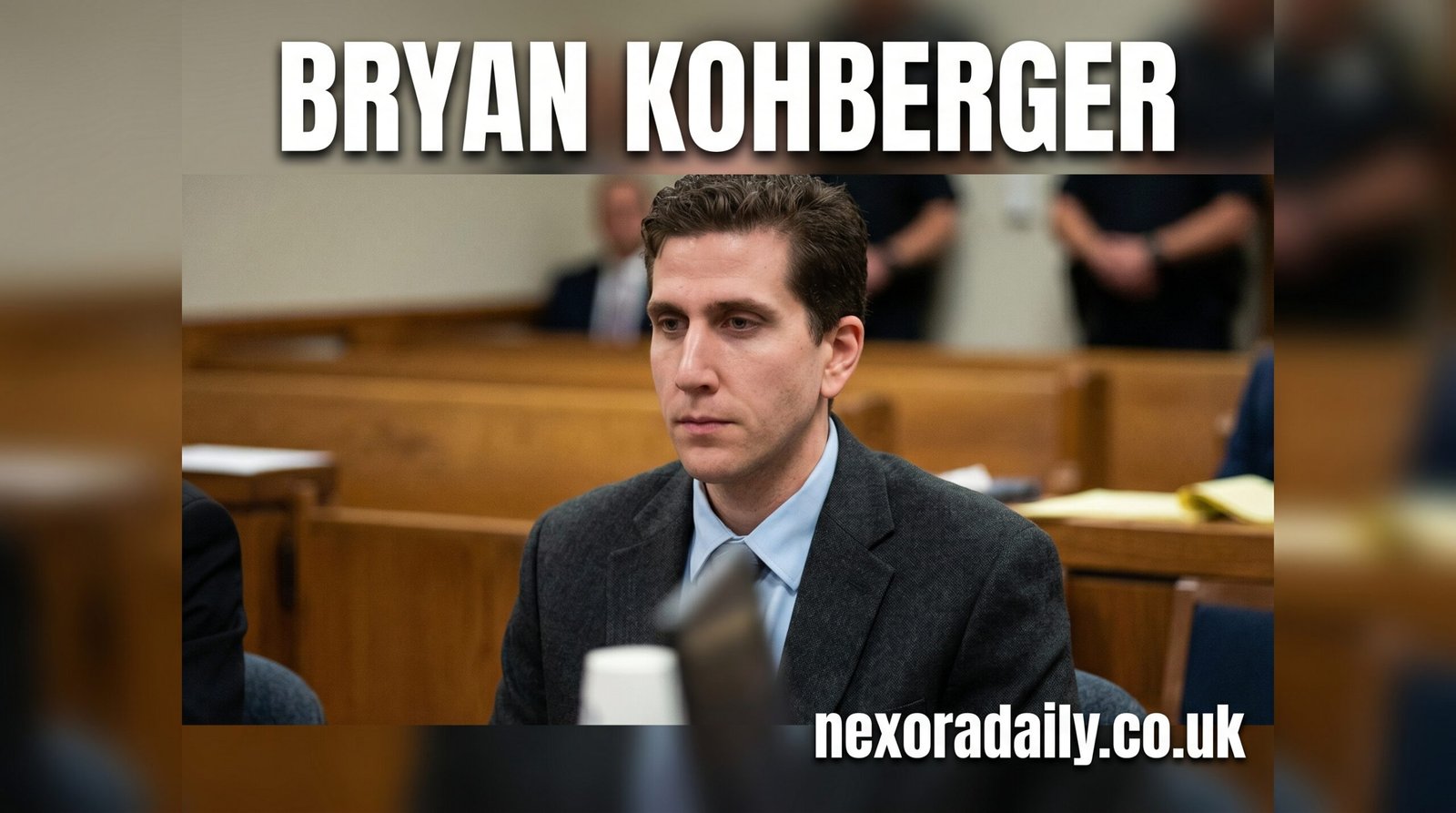
The Bryan Kohberger case became one of the most widely discussed criminal investigations in recent American history. What began as a shocking crime in a quiet college town quickly turned into a national obsession involving forensic evidence, criminal justice studies, digital surveillance, legal debates, and intense media coverage. Searches for terms like Bryan Kohberger update, Idaho murders suspect, Bryan Kohberger trial news, University of Idaho murders case, and Bryan Kohberger sentencing continue to trend because people are still trying to understand how such a horrifying crime happened.
The murders of four University of Idaho students in November 2022 stunned the country. The victims were young college students with promising futures, and the brutal nature of the killings triggered widespread fear throughout university communities across the United States. For weeks, investigators remained under pressure as the public demanded answers. When authorities eventually arrested Bryan Kohberger, many were shocked to learn that he was pursuing advanced studies in criminology, which added another disturbing layer to the case.
As the legal process unfolded, the public followed every court hearing, evidence update, and legal motion. The case later took another dramatic turn when Kohberger pleaded guilty, avoiding the death penalty but receiving multiple life sentences. Even after the court process ended, major questions remain unanswered, especially regarding motive and planning.
This article explores everything known about Bryan Kohberger, including his background, the University of Idaho murders timeline, the investigation, forensic evidence, court proceedings, sentencing, unanswered questions, and the long-term impact of the case.
Bryan Kohberger’s Early Life and Educational Background
Bryan Christopher Kohberger was born on November 21, 1994, in Albrightsville, Pennsylvania. Before his name became connected to one of America’s most shocking murder cases, he lived what appeared to be a relatively ordinary life. He grew up in Pennsylvania and attended local schools, where former classmates later described him as quiet, intelligent, and sometimes socially awkward.
Reports from former acquaintances suggested that Kohberger struggled with addiction issues during his teenage years. Some individuals claimed he battled heroin addiction before later becoming focused on improving his life through education. While these reports received media attention, many details remain based on personal accounts rather than official records.
Kohberger attended Northampton Community College before transferring to DeSales University in Pennsylvania. He earned an undergraduate degree and later completed graduate studies focused on criminal justice and psychology-related subjects. During his academic career, he reportedly showed strong interest in criminal behavior, law enforcement procedures, and forensic investigation.
One detail that attracted major public attention involved a research survey Kohberger allegedly posted online before the murders. The survey reportedly asked criminals about their emotions and thoughts while committing crimes. After his arrest, many people revisited this survey and speculated whether it reflected deeper personal interests.
In 2022, Kohberger moved to Washington state to begin a PhD program in criminology at Washington State University. He also worked as a teaching assistant. Few people could have imagined that only months later he would become the focus of a national murder investigation.
The University of Idaho Murders That Shocked the Nation
During the early morning hours of November 13, 2022, tragedy struck in Moscow, Idaho. Four University of Idaho students were killed inside an off-campus rental home located near campus.
The victims were Kaylee Goncalves, Madison Mogen, Xana Kernodle, and Ethan Chapin. They were all young students with close friendships and active social lives. Their deaths devastated families, classmates, and the wider university community.
Authorities stated that the victims were stabbed multiple times with a large fixed-blade knife. The crime scene was described as extremely violent. Two roommates survived because they were in different parts of the home during the attack.
One surviving roommate later told investigators she heard unusual noises and briefly saw a masked man leaving the home. This witness statement later became a critical component of the investigation timeline.
The murders triggered fear throughout Moscow, Idaho. Residents worried whether a dangerous killer remained in the community. Many students left campus temporarily as fear spread nationwide.
The Initial Investigation and Public Pressure
Law enforcement agencies faced enormous pressure in the days following the murders. The Moscow Police Department worked alongside Idaho State Police and the FBI to investigate the crime.
In the early days, authorities released limited information, frustrating many members of the public. Social media users began creating theories, accusing innocent people, and spreading false rumors online.
Investigators conducted hundreds of interviews, collected physical evidence, reviewed surveillance footage, and analyzed digital records. Law enforcement repeatedly asked the public for patience while they built their case.
One major breakthrough involved identifying a white Hyundai Elantra seen near the victims’ home around the time of the murders. Police publicly asked for help locating the vehicle, which generated nationwide attention.
This vehicle would later become one of the most important leads in identifying Bryan Kohberger.
DNA Evidence and Forensic Breakthroughs
Forensic evidence played a central role in solving the Idaho murders case. Investigators found a knife sheath near one of the victims at the crime scene.
DNA recovered from the sheath reportedly matched Bryan Kohberger. Authorities later used investigative genetic genealogy methods to strengthen their identification efforts.
Law enforcement also tracked Kohberger’s movements through surveillance footage showing his white Hyundai Elantra traveling near the crime scene.
Cell phone records became another critical piece of evidence. Investigators alleged that Kohberger’s phone had been near the victims’ residence multiple times before the murders, suggesting possible surveillance or stalking behavior.
Authorities also stated that his phone appeared to be turned off or placed in airplane mode during the estimated time of the killings, which prosecutors viewed as suspicious behavior.
The combination of DNA evidence, phone records, surveillance footage, and vehicle identification helped investigators build their case.
Bryan Kohberger’s Arrest in Pennsylvania
On December 30, 2022, law enforcement officers arrested Bryan Kohberger at his parents’ home in Pennsylvania.
The arrest involved cooperation between local police, Idaho investigators, and federal authorities. Reports indicated investigators had monitored him while he traveled cross-country with his father from Washington to Pennsylvania.
Authorities allegedly recovered various items during searches, including potential evidence from his vehicle, apartment, and family home.
The arrest shocked the public because Kohberger had no major criminal history and was studying criminology at a doctoral level.
Many people immediately questioned whether his education helped him plan the crime or avoid detection.
Court Hearings and Legal Developments
After his arrest, Kohberger was extradited to Idaho to face charges.
Court proceedings quickly became major national news events. Prosecutors formally charged him with four counts of first-degree murder and one count of burglary.
His defense team challenged several elements of the prosecution’s case, including evidence collection methods and media influence.
The court issued gag orders limiting what attorneys and investigators could publicly discuss.
Legal experts debated whether Kohberger could receive a fair trial due to overwhelming media attention.
The prosecution initially announced plans to seek the death penalty.
Why Bryan Kohberger Pleaded Guilty
One of the biggest turning points occurred when Kohberger agreed to plead guilty.
By accepting a plea deal, he avoided a death penalty trial. In return, he admitted responsibility for all four murders and the burglary charge.
The plea agreement generated mixed reactions from victims’ families. Some supported avoiding years of appeals, while others wanted a public trial that might reveal additional answers.
One of the biggest frustrations was Kohberger’s refusal to explain his motive.
His guilty plea ended many legal battles but did not provide emotional closure for everyone involved.
Bryan Kohberger Sentencing and Final Court Appearance
In 2025, the court sentenced Bryan Kohberger to four consecutive life sentences without parole.
He also received an additional sentence related to burglary charges.
During sentencing hearings, family members delivered emotional victim impact statements.
Some directly addressed Kohberger in court, expressing grief, anger, and frustration.
Observers noted that Kohberger remained largely emotionless throughout the proceedings.
His refusal to explain why he committed the murders continued to frustrate investigators and families.
Unanswered Questions About Motive
One of the biggest unresolved questions remains motive.
Authorities never publicly confirmed whether Kohberger personally knew any of the victims.
Some reports suggested possible social media interactions, while others found no direct connection.
Investigators explored whether one victim may have been the original target, but no definitive conclusion was publicly released.
Without a full trial, many investigative details may never become public.
This uncertainty continues fueling public fascination with the case.
Media Coverage, Public Reaction, and Long-Term Impact
The Bryan Kohberger case became a major true crime phenomenon.
News outlets, documentaries, YouTube channels, podcasts, and social media creators closely followed every development.
Unfortunately, misinformation spread rapidly online, and several innocent individuals faced false accusations.
The case also sparked discussions about ethical true crime reporting and the dangers of online speculation.
Universities across America revisited campus safety procedures following the murders.
The victims’ families continue honoring their loved ones through memorials and advocacy efforts.
Conclusion
The Bryan Kohberger case remains one of the most disturbing and closely followed criminal cases of modern times. It combined brutal violence, advanced forensic investigation, courtroom drama, and unanswered psychological questions that continue to capture public attention.
While Bryan Kohberger will spend the rest of his life in prison, the real focus should remain on the four young lives lost far too soon: Kaylee Goncalves, Madison Mogen, Xana Kernodle, and Ethan Chapin.
Their families, friends, and community continue living with unimaginable grief. Although the criminal case has reached its legal conclusion, the emotional impact of the tragedy will last for generations.
