

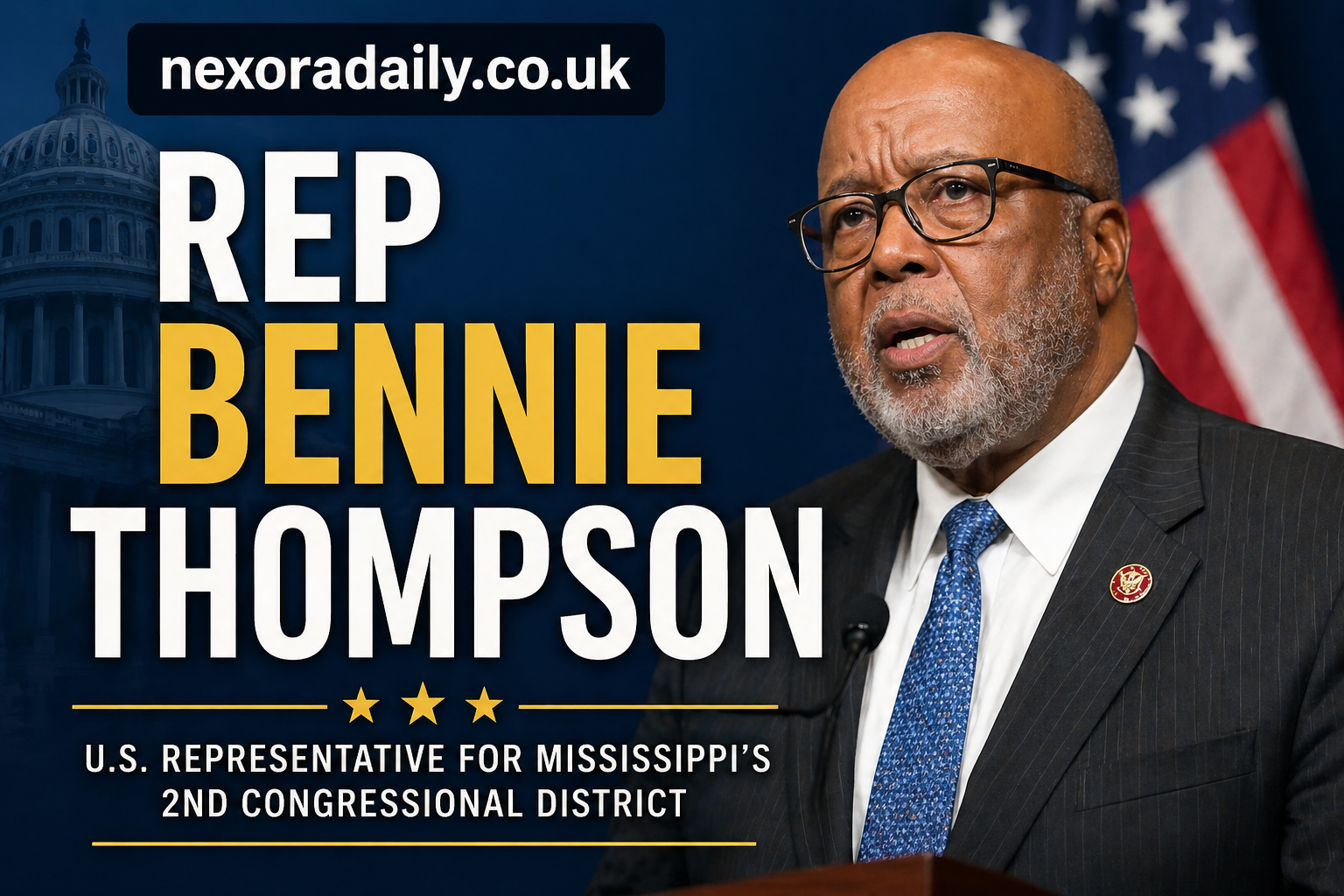
In the landscape of American politics, certain figures stand out not only for their longevity in office but also for their consistent commitment to public service. One such figure is Representative Bennie Thompson, a prominent member of the United States Congress known for his work on homeland security, civil rights, and governance. Over decades of service, he has built a reputation as a steady and influential voice in national policy.
This in-depth article explores the life, career, achievements, and broader impact of Bennie Thompson, offering a detailed look at his journey from local leadership in Mississippi to becoming one of the most recognized lawmakers in Washington, D.C.
Early Life and Background
Bennie Gordon Thompson was born on January 28, 1948, in Bolton, Mississippi. Growing up in the American South during a time of significant social and political change, Bennie Thompson experienced firsthand the challenges of racial inequality and economic hardship.
Educational Journey
He pursued higher education at:
- Tougaloo College, where he earned a Bachelor of Arts degree
- Jackson State University, where he completed a Master’s degree
His academic background in political science and public administration laid the foundation for his future in public service.
Entry into Public Service
Before entering Congress, Bennie Thompson was actively involved in local politics and community development.
Early Roles
- Mayor of Bolton, Mississippi
- Member of the Hinds County Board of Supervisors
These roles allowed him to focus on grassroots issues such as infrastructure, education, and economic development. His leadership at the local level helped build trust within his community and set the stage for his future political career.
Election to the U.S. House of Representatives
Bennie Thompson was first elected to the U.S. House of Representatives in 1992. He represents Mississippi’s 2nd Congressional District, a region with a rich cultural history and diverse population.
Key Milestones
- One of the longest-serving members of Congress from Mississippi
- A consistent advocate for underserved communities
- A leader on issues affecting rural and urban populations alike
His tenure reflects both stability and adaptability in an ever-changing political environment.
Role in Homeland Security
One of the defining aspects of Thompson’s career is his work on homeland security Bennie Thompson.
Chairman of the Homeland Security Committee
Thompson served as Chairman of the House Committee on Homeland Security, where he played a crucial role in shaping national security policies.
Responsibilities Included:
- Oversight of the Department of Homeland Security
- Addressing threats related to terrorism and cyber security
- Enhancing disaster preparedness and response
His leadership in this area has been widely recognized, particularly during times of national crisis.
Leadership During National Events
Bennie Thompson has been involved in several significant moments in U.S. history.
Congressional Investigations
He has taken part in major congressional inquiries and oversight efforts, demonstrating a commitment to accountability and transparency.
Crisis Management
His role in homeland security placed him at the forefront of discussions on:
- Emergency response strategies
- National defense coordination
- Infrastructure protection
Legislative Priorities
Throughout his career, Thompson has focused on a range of legislative issues.
1. Civil Rights
He has consistently supported policies aimed at:
- Protecting voting rights
- Promoting equality
- Addressing systemic discrimination
2. Economic Development
Thompson has advocated for:
- Job creation
- Infrastructure investment
- Support for small businesses
3. Education
He has worked to improve access to quality education, particularly in underserved communities.
Advocacy for Mississippi
As a representative of Mississippi’s 2nd District, Thompson has remained deeply connected to his constituents.
Key Areas of Focus
- Rural development
- Healthcare access
- Agricultural support
His efforts aim to address both immediate needs and long-term growth in the region.
Political Philosophy
Bennie Thompson is known for his pragmatic approach to governance.
Core Principles
- Commitment to public service
- Emphasis on fairness and equality
- Focus on practical solutions
His leadership style reflects a balance between advocacy and collaboration.
Challenges and Criticism
Like any long-serving politician, Thompson has faced challenges and criticism.
Common Areas of Debate
- Policy disagreements
- Partisan conflicts
- Public scrutiny of decisions
Despite these challenges, he has maintained a strong presence in Congress.
Influence in Washington
Over the years, Thompson has built significant influence within the political system.
Factors Contributing to His Influence
- Seniority in Congress
- Leadership roles in committees
- Expertise in homeland security
His voice carries weight in legislative discussions and policy decisions.
Collaboration and Bipartisanship
While politics can be deeply divided, Thompson has worked across party lines when necessary.
Examples of Collaboration
- Supporting bipartisan legislation
- Engaging in committee negotiations
- Building coalitions for key issues
This approach has helped advance policies that require broad support.
Public Perception
Bennie Thompson is generally viewed as a dedicated public servant.
Positive Perceptions
- Experienced and knowledgeable
- Committed to his constituents
- Strong advocate for civil rights
Criticism
- Subject to political opposition
- Debates over policy positions
Public perception often reflects broader political dynamics.
Contributions Beyond Legislation
Thompson’s impact extends beyond the laws he has helped pass.
Mentorship
He has supported and mentored emerging leaders in politics and public service.
Community Engagement
He remains actively involved in community initiatives and local events.
Awards and Recognition
Throughout his career, Thompson has received recognition for his work.
Types of Honors
- Awards for public service
- Recognition from advocacy groups
- Honors for leadership in security and governance
These accolades highlight his contributions to both national and local communities.
Personal Life
Bennie Thompson maintains a relatively private personal life.
Key Aspects
- Strong ties to Mississippi
- Commitment to family and community
- Long-standing dedication to public service
His personal values often align with his professional work.
Legacy and Long-Term Impact
As one of the longest-serving members of Congress, Thompson’s legacy is significant.
Areas of Impact
- Strengthening homeland security policies
- Advancing civil rights legislation
- Supporting economic development in Mississippi
His work has left a lasting mark on both national policy and local communities.
Future Outlook
Even after decades in public service, Thompson continues to play an active role in politics.
Potential Directions
- Continued legislative leadership
- Ongoing advocacy for key issues
- Influence on future policy debates
His experience ensures that he remains a relevant figure in American politics.
Broader Context of His Career
Bennie Thompson’s career reflects broader trends in American governance.
Key Themes
- The importance of experience in leadership
- The role of oversight in democracy
- The balance between national and local priorities
His journey illustrates how individual leaders can shape institutional outcomes.
Conclusion
Bennie Thompson stands as a prominent figure in American politics, known for his long-standing commitment to public service and his influential role in shaping national policy. From his early days in Mississippi to his leadership in Congress, Thompson’s career reflects dedication, resilience, and a focus on meaningful change.
His work in homeland security, civil rights, and economic development has had a lasting impact on both his constituents and the nation as a whole. While debates and challenges are an inherent part of political life, his contributions continue to be recognized and respected.
