

Global supply chains have changed dramatically over the last few years. Businesses are no longer dealing with simple supplier-to-customer operations. Today’s supply networks involve multiple manufacturers, suppliers, third-party logistics providers, ports, warehouses, customs authorities, transportation companies, and last-mile delivery partners spread across different countries. While this global expansion creates growth opportunities, it also increases complexity. A single delay at one stage can trigger major disruptions throughout the entire network. This growing complexity has made supply chain visibility software one of the most important technologies for modern businesses.
The COVID-19 pandemic exposed major weaknesses in global supply chains, but it was only one example of why visibility matters. Port congestion, geopolitical conflicts, labor shortages, rising fuel prices, inflation, extreme weather events, and changing customer expectations continue to create operational challenges for companies worldwide. Research from McKinsey found that companies can expect supply chain disruptions lasting one month or longer every 3.7 years on average. At the same time, customers now expect faster deliveries, accurate tracking updates, and product availability at all times. Businesses that lack supply chain transparency often struggle to meet these expectations.
Supply chain visibility software helps organizations solve these challenges by providing real-time tracking, operational insights, predictive analytics, inventory transparency, supplier monitoring, and transportation intelligence across the entire supply chain. Instead of reacting after disruptions occur, companies can identify risks early and make faster decisions. Supply Chain Visibility Software From manufacturers and retailers to healthcare providers and eCommerce companies, businesses across industries are investing heavily in digital supply chain visibility tools to improve resilience, reduce costs, and enhance customer satisfaction.
What Is Supply Chain Visibility Software?
Supply chain visibility software is a digital platform designed to provide companies with real-time insight into the movement of products, inventory, shipments, suppliers, and logistics operations across the supply chain. It connects multiple systems, including transportation management systems, enterprise resource planning software, warehouse management platforms, supplier databases, freight carrier networks, and inventory systems to create a centralized operational dashboard.
The software allows organizations to track goods from raw material sourcing to final customer delivery. Businesses can monitor inventory levels, shipment progress, supplier performance, warehouse productivity, and transportation efficiency in one place. This creates end-to-end supply chain visibility that helps organizations identify bottlenecks before they become larger operational problems.
Modern supply chain visibility platforms often use cloud computing, artificial intelligence, machine learning, Internet of Things sensors, GPS tracking, blockchain systems, and automation technologies to improve accuracy. These systems gather large amounts of operational data and convert it into actionable business insights that improve supply chain decision-making.
Why Supply Chain Visibility Has Become a Business Priority
Before digital transformation accelerated, many companies relied on spreadsheets, manual phone calls, emails, and disconnected software systems to manage logistics operations. Supply Chain Visibility Software These outdated processes often created delays in communication and prevented businesses from seeing real-time issues. If a shipment was delayed at a port, many companies did not know until it directly impacted production schedules or customer orders.
Recent global disruptions have pushed businesses to prioritize supply chain resilience. The semiconductor shortage disrupted automotive production worldwide. Container shortages increased shipping costs dramatically. Red Sea shipping disruptions forced companies to reroute shipments and extend transit times. These events showed executives that supply chain blind spots create major financial risks.
Consumer behavior has also shifted significantly. Same-day delivery, fast shipping, and real-time order tracking have become common expectations in eCommerce and retail. Businesses without strong supply chain tracking systems often lose customers to competitors that offer better visibility and faster delivery experiences.
How Supply Chain Visibility Software Works
Supply chain visibility software collects data from multiple sources throughout the supply chain ecosystem. GPS systems provide real-time vehicle tracking, while IoT sensors monitor product location, temperature, humidity, and product handling conditions during transportation Supply Chain Visibility Software.
Application programming interfaces allow the software to integrate with ERP systems, transportation providers, warehouse software, suppliers, and freight carriers. This creates a centralized stream of operational data that businesses can analyze through dashboards and reporting tools.
Artificial intelligence plays a growing role in modern platforms. Machine learning algorithms can predict delays, identify transportation inefficiencies, forecast inventory shortages, and recommend corrective actions. Predictive supply chain analytics helps companies move from reactive operations to proactive supply chain management.
Core Features of Supply Chain Visibility Platforms
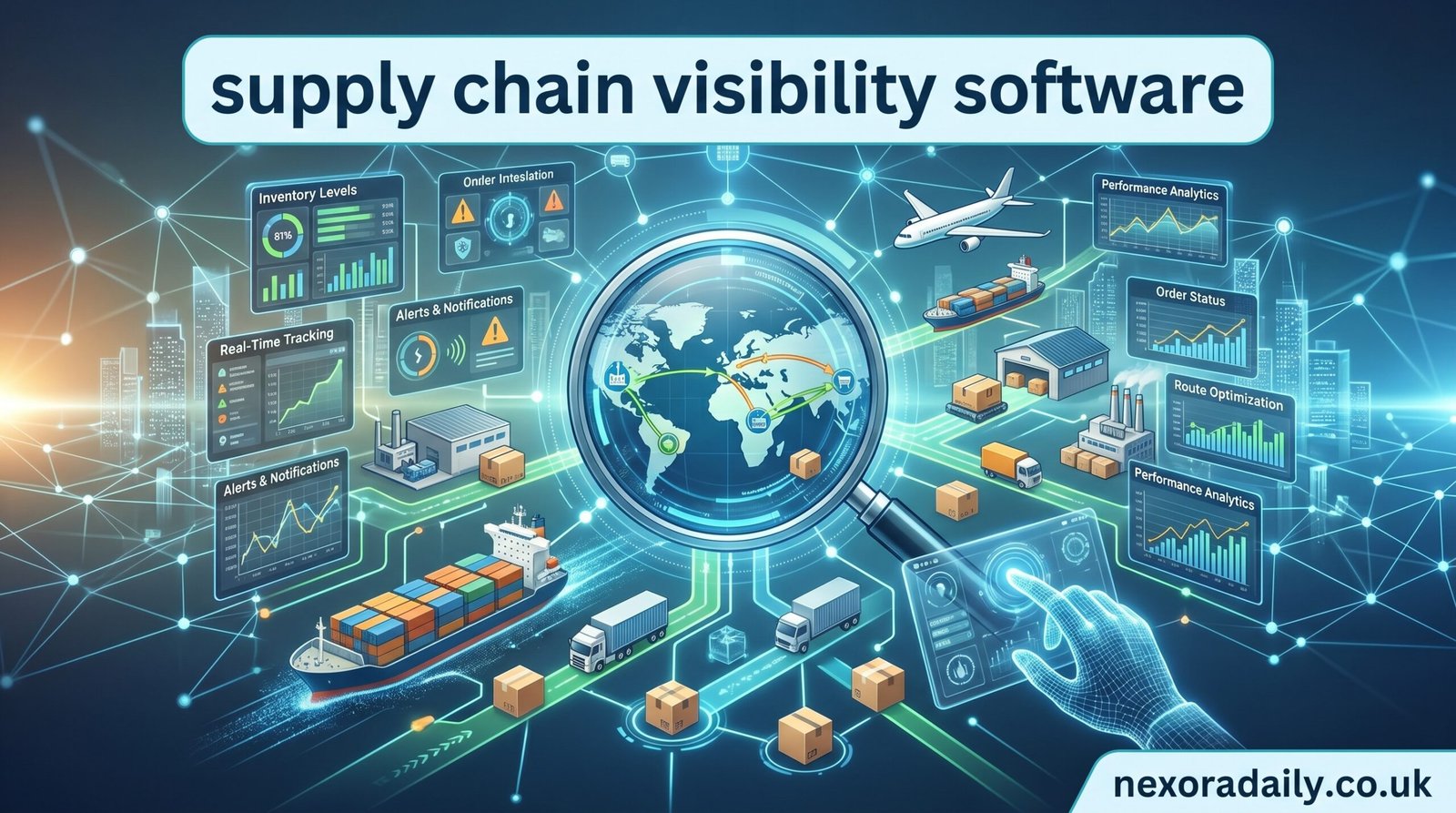
Real-time shipment tracking remains one of the most valuable features of supply chain visibility software. Businesses can monitor shipments across ocean freight, trucking networks, rail systems, and air transportation routes. This helps logistics teams respond quickly when delays occur.
Inventory visibility helps companies track stock across warehouses, fulfillment centers, retail stores, and distribution facilities. Businesses can avoid stockouts while reducing excess inventory carrying costs.
Supplier visibility tools help organizations monitor vendor performance, production schedules, procurement timelines, and supplier risks. Some advanced platforms also include demand forecasting, automated alerts, exception management, analytics dashboards, sustainability reporting, and route optimization capabilities Supply Chain Visibility Software.
Benefits of Supply Chain Visibility Software
One major benefit is improved operational efficiency. Companies gain faster access to information, which helps teams make quicker decisions and reduce delays. Warehouse operations become more efficient when inventory data is accurate and transportation schedules are visible.
Cost reduction is another significant advantage. Businesses can reduce detention fees, lower freight expenses, prevent inventory overstocking, and minimize emergency shipping costs. Better forecasting also reduces unnecessary operational waste.
Customer experience improves significantly when businesses provide accurate delivery timelines and real-time updates. This is particularly important for retail, healthcare, food distribution, and eCommerce businesses where timing directly impacts customer satisfaction.
Industries That Rely on Supply Chain Visibility Solutions
Retail companies use supply chain visibility tools to manage inventory across stores, warehouses, and eCommerce channels. During peak shopping seasons, visibility software helps retailers prevent inventory shortages and delivery delays.
Manufacturing companies rely heavily on visibility platforms because production often depends on timely raw material deliveries. Automotive manufacturers, electronics companies, and industrial producers frequently use supplier tracking systems to prevent production interruptions.
Healthcare and pharmaceutical companies require strong visibility due to strict compliance regulations and product sensitivity. Temperature-controlled medications, vaccines, and medical devices often require advanced tracking systems to ensure product safety.
Food and beverage companies also depend on real-time logistics visibility because perishable products require precise transportation coordination. Delays can lead to spoilage, waste, and financial losses.
The Role of Artificial Intelligence in Supply Chain Visibility
Artificial intelligence is transforming how businesses manage supply chain operations. Traditional systems simply reported what had already happened. AI-powered platforms can predict future disruptions before they occur.
Machine learning models analyze weather forecasts, carrier performance data, geopolitical risks, traffic conditions, historical shipping trends, and supplier behavior to predict delays. This allows businesses to reroute shipments or adjust inventory plans in advance.
AI also improves demand forecasting by analyzing consumer purchasing behavior, seasonal trends, promotional activity, and market conditions. Better forecasting reduces inventory waste while improving product availability.
Common Supply Chain Visibility Challenges
Despite its benefits, implementing supply chain visibility software can be challenging. Many businesses still operate legacy systems that are difficult to integrate with modern platforms.
Data fragmentation is another major issue. Suppliers, transportation providers, warehouses, and internal teams may all use different systems, creating inconsistent data flows.
Cybersecurity concerns are also increasing as supply chains become more digitally connected. Businesses must protect sensitive operational data from cyber threats while maintaining system accessibility across multiple partners.
Future Trends in Supply Chain Visibility Software
Blockchain technology is gaining attention for improving transparency and traceability. It creates secure digital records that help businesses verify product origins and reduce fraud risks.
Digital twin technology allows organizations to simulate supply chain scenarios before making operational decisions. This improves strategic planning and risk management.
Sustainability tracking is becoming another major trend. Businesses face growing pressure to reduce emissions and improve environmental performance. Modern supply chain visibility platforms now help companies track carbon emissions, transportation efficiency, and sustainability goals.
Cloud adoption continues to grow because cloud-based platforms offer scalability, flexibility, and lower infrastructure costs compared to traditional on-premise systems.
Conclusion
Supply chain visibility software has become essential for businesses operating in increasingly complex global markets. Real-time tracking, predictive analytics, supplier transparency, inventory optimization, and transportation intelligence help companies build stronger, more resilient operations.
As disruptions continue to affect global commerce, businesses that invest in supply chain visibility technology will be better positioned to reduce risk, control costs, and meet rising customer expectations. Companies that continue relying on outdated systems may struggle to compete in a market where speed, transparency, and operational intelligence are becoming critical advantages.
